Classroom Stories – Interview With Teacher Ilhana Šahinović
 24.01.2023..
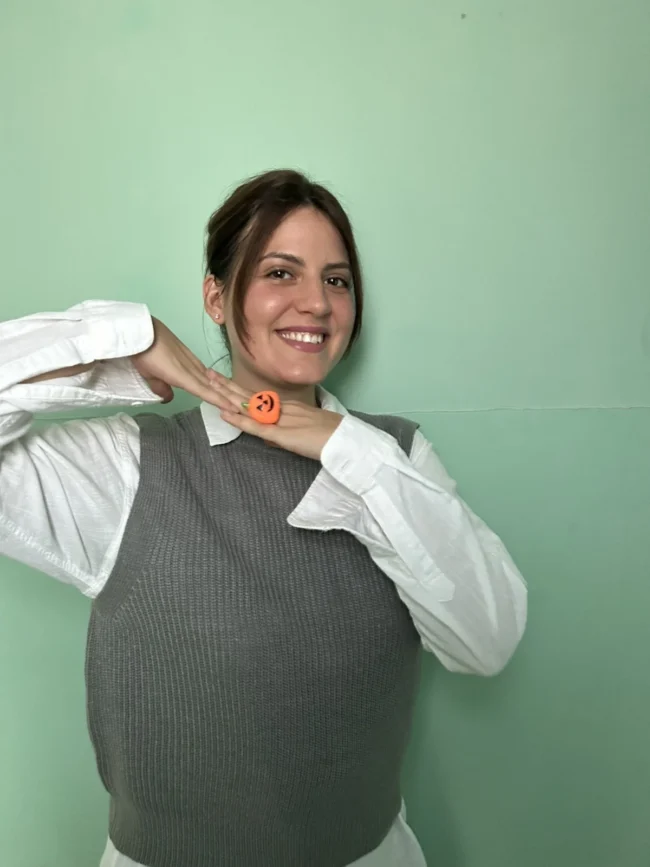
Ilhana Šahinović is a highly energetic teacher who brings that same vibrant energy into her online classroom and wakes her students up during morning lessons with her unique enthusiasm.
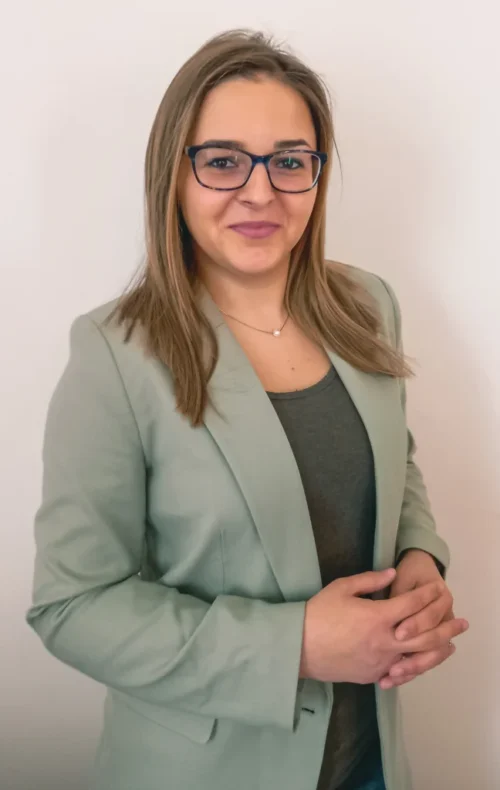
A 26-year-old born in Zenica, a city on the river of the same name, just like Bosnia and Herzegovina itself is shaped by the Bosna River. She has never moved far from it. She lived in Kakanj, and later moved to Sarajevo with her husband Edin. In a way, Bosnia led her back toward its own roots.
Ilhana graduated from the Faculty of Philosophy in Zenica, Department of Bosnian/Croatian/Serbian Language and Literature.
“Since I’m young and unfortunately it is very difficult for young people to find work in education, I briefly worked at a primary school for nine months. I taught the mother tongue to children of all ages and gained experience that helped me in my further work with students,” Ilhana shares about her experience.
Through Language We Learn Much More
She believes that working in a classroom carries great responsibility because educators are not only people who transfer academic knowledge.
“Teachers are first and foremost people who raise and care for their students, protect them, guide them, teach them healthy life habits, think about their feelings, and only then transfer the knowledge defined by the curriculum.”
All of this is a responsibility, as Ilhana emphasizes, but in the end there is no greater feeling than seeing a child apply what you have taught them.
The Connection Between Culture, Belonging and Identity
While searching for a job, she came across a Tako Lako advertisement and wondered what it was about. What stood out to her was the realization that parents want their children to learn a language that is native to them but not to their children.
“Children whose parents come from Bosnia and Herzegovina should learn the Bosnian language. It is an important part of their lives, from the need to communicate with relatives to understanding the culture and identity they come from. Learning a language cannot be imagined without learning about culture, customs, geography and history,” she says.
She has taught children aged 6 to 14 from various European countries such as Denmark, Germany, England and much more.
Bosnian as a Foreign Language
“Especially difficult for me was lowering my expectations. I was also afraid of the online setup and of how to teach Bosnian as a foreign language. It was not an easy task, but it was a challenge, and I like challenges because I try to solve them with hard work and effort. The most important thing for me was realizing that I was no longer teaching a mother tongue that is assumed to be known, but my own language as a foreign language,” Ilhana explains, adding that this is the key difference between teaching children in Bosnia and Herzegovina and those in the diaspora.
She eagerly looks forward to her classes, which often bring very interesting situations.
“Sometimes we even create new words. 
Teacher: What do you call a man who cuts hair?
Students: Shišar.
Teacher: And a woman?
Students: Shišarka.”
Not only students learn, as the teacher says, but she learns as well because every lesson brings new knowledge and different experiences.
“The first classes passed with enthusiasm but also with a certain level of caution, while the last ones were filled with conversation until the very last minute. I saw progress in every child, their desire to learn and our shared positive result. In the end, everything was so TAKO LAKO,” Ilhana concludes.
Final thoughts
This conversation reminds us that behind every classroom there is much more than a curriculum. There is dedication, patience and a desire to bring knowledge closer to children in a meaningful and personal way.
Language learning becomes a journey into culture, identity and connection with one’s roots, while the classroom becomes a space of growth and understanding for both students and teachers. When knowledge is shared with care and heart, learning becomes far more than we usually imagine.
This interview is just one in a series of similar stories on our blog. There you will find many more experiences, insights and perspectives, each with its own valuable lesson.