Is It Really Such A Big Deal To Teach A Child Their Mother Tongue?
 20.04.2022..
Written by: Nidžara Fazlić, mother of Uma (8) and Elza (6), who communicate in Danish, English and Bosnian
Copenhagen, Denmark.
The answer to whether children retain the Bosnian language is not simple — it can be both yes and no.
- YES – if we do not invest time and motivate our children to use the Bosnian language
NO – if we integrate the Bosnian language into small, everyday activities at home and expose them to as many people as possible who speak Bosnian.
While I was on maternity leave and spending 24/7 with my children, I spoke to them exclusively in Bosnian. When they went to daycare and kindergarten, Danish slowly started to prevail as the primary language of communication between the children, while they would still communicate with me in Bosnian. Since they started school, their primary language has been Danish, and they use English every day, while Bosnian is only used when necessary, when I require them to communicate in Bosnian. Something has gone wrong and I need to take over now!
What Is The Goal When Children Live Between Multiple Cultures And Languages?
My family is multicultural and we live in different parts of the world. It is very important to me that my children and my siblings’ children have a common language to communicate in, and that is Bosnian.
I know that raising multilingual children comes with challenges. I have no illusion that my children will be perfect in Bosnian, but I do know that I can give them a stable linguistic foundation on which they can build not only Bosnian but also other languages and competencies that come with growing up in multiple languages and cultures.
It is encouraging that some studies suggest a child only needs 20–30% exposure to a second language to become bilingual. The key question is the quality of that 30% and how we integrate it into everyday life.
We Are Too Busy As A Family
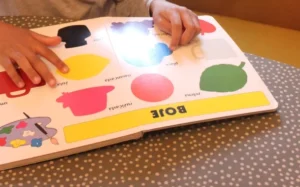
We are too busy as a family
This is a sentence that every family today could sign as their motto.
Lack of time is probably the most common excuse for not doing something. However, we can still ask ourselves whether this is really the true reason, because we usually find time for what matters most.
OK, Time Is A Problem But How Much Time Is Actually Needed?
So, if we ourselves do not have time, we can leave the responsibility to monolingual grandparents to help with the development of the Bosnian language in children. But if that option is not available, then we as parents must be truly intentional about the time we set aside and invest.
I strongly believe that if I invest at least 30 minutes of continuous, active use of Bosnian with my children, it is not only achievable but also very effective, and it will without a doubt become something children appreciate and look forward to. Because we are still, as parents, their biggest role models, and we should make use of that while it lasts. 😊
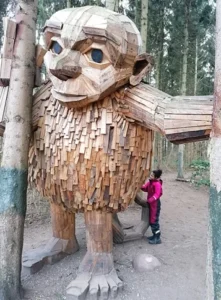
How I Do The “Giant Work” Through The Bosnian Language In Parenting
I am sharing my plan and a few recommendations that I started using in my everyday life in order to motivate my children to learn and use the Bosnian language.
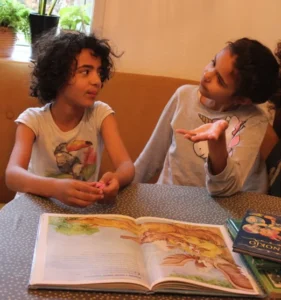
- Every evening I read to my children in Bosnian or we talk about the past day, as much as possible in Bosnian.
- I speak Bosnian with my children not only at home but also outside the home. Speaking the mother tongue outside the home is very important so that children do not associate the language with something foreign or something used only at home.
- I also advise friends who speak Bosnian to communicate with my children exclusively in Bosnian.
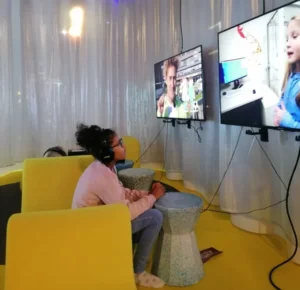
- I actively search for and use digital resources that help learning Bosnian, such as Tako Lako lessons and YouTube videos with songs and stories in Bosnian.
So, the answer to the question from the beginning is clear: no, learning your mother tongue is not a “bauk” if you approach it with love and patience. The key is consistency and turning learning into everyday fun. Whether it is reading picture books, singing songs or talking during dinner, every moment counts. Your child has an incredible capacity for learning – it is up to you to open the doors to that beautiful world.
Are you ready to break the “bauk” with us? Sign up for a trial lesson and see how learning can be easy!