Classroom Stories – Interview With Teacher Staša Dedić
 25.11.2022..
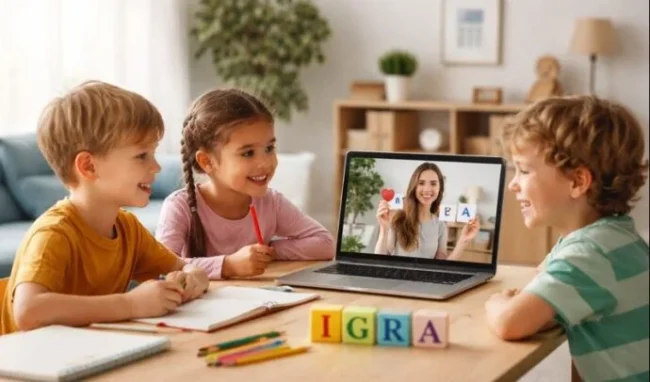
We continue our conversations about learning the Bosnian language among children who grow up outside of Bosnia and Herzegovina through the experiences of teachers who face these challenges every day. This time we talk with teacher Staša Vukasović about how language can be built through routine, relationships and everyday communication with children.

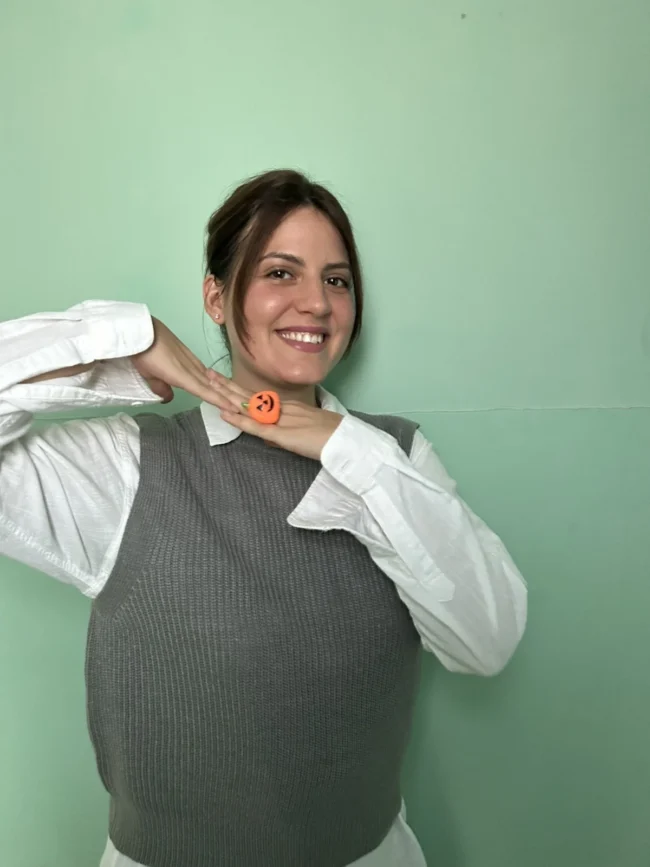
The Bosnian-Herzegovinian river Vrbas is one of the fastest mountain rivers in our country. This river is one of the two major ones (along with the Sana) that flows through the native region of our teacher Staša Vukasović, the Mrkonjić Grad region. People say that the environment can partly shape a person’s temperament. Vrbas has, one could say, shaped an important trait of teacher Staša. She is fast, so we often call her the “superfast teacher.” This is not only said by her colleagues in the team, but also by the students who attend her classes.
When Working With Children Becomes A Life Calling
Thirteen years ago she graduated from the Pedagogical Academy in Sarajevo. Her final thesis was in a very important area of work with children, pedagogy, with the topic “The influence of different teaching styles on the quality of socio-emotional climate in the classroom.” She did not stop there. Knowledge, learning and investing in herself are her imperative.
“Since then I have continued to improve my work through postgraduate studies and various types of education, both formal and informal. I have been working at the ‘Skender Kulenović’ Primary School in Sarajevo for 13 years with younger school-aged children,” says teacher Staša.
She says she does not consider going to school a job. Working with children is what makes her happy.
Joining The Tako Lako Team Also Brought Her Some Fears
“When I started working in the Tako Lako team I did not have a fear of approaching children from the diaspora, however I did have a fear of whether everything would work in the online classroom. Today, after getting to know that world better, there is no fear.”
Parents of children attending Bosnian language courses with this superfast teacher often mention her relaxed approach as a special quality and something children love most. This is also what she offers. It is not effort, she emphasizes, it simply comes naturally.
“Right now I feel very relaxed in the online classroom. I enjoy it. And I try, through that relaxed approach, to teach the children what they are there with me for during that one hour,” she says.
Around fifty students from various European countries, as well as from the United States and Canada, have attended her classes.
“Honestly, I am satisfied with their results. In general, in the classroom, including the Tako Lako classroom, it is important for the teacher to sense the children; everything else follows.”
There Are Many Interesting Moments
“I especially enjoy lessons in which children take initiative and lead the class in a direction opposite to what was planned,” says the superfast teacher.
Staša Vukasović has also worked with children who did not know a single word in the Bosnian language. It is important to note that many of those children continued their learning through higher-level courses.
“It is a wonderful feeling when, after the tenth lesson, you realize that they are talking with you, even though they did not know a single word of the Bosnian language.”
For parents of children living abroad, it is not easy—besides the daily obligations that both they and their children have, it is certainly difficult to find time for the child to use the Bosnian language. Teacher Vukasović has recognized this as well. That is why she approaches each child individually and with dedication. Her goal, she says, is for the child to become more confident so they can more easily start speaking and using what they know of the Bosnian language.
Final Thoughts
This conversation once again reminded us that the most important things in education often do not happen in curricula and lesson plans, but in everyday encounters in the classroom, among children and those who guide them through their first school steps. Through years of work, experience and continuous learning, it is clear that the true result is measured not only by the knowledge children acquire, but also by the sense of security, support and relationships they build with their teachers.