Classroom Stories – Interview With Teacher Melika Hrvić
 06.03.2024..
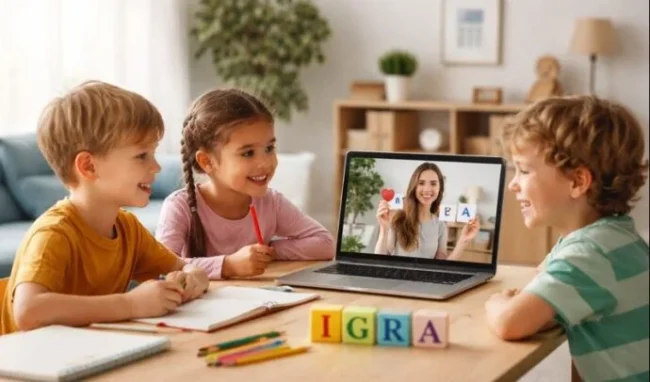
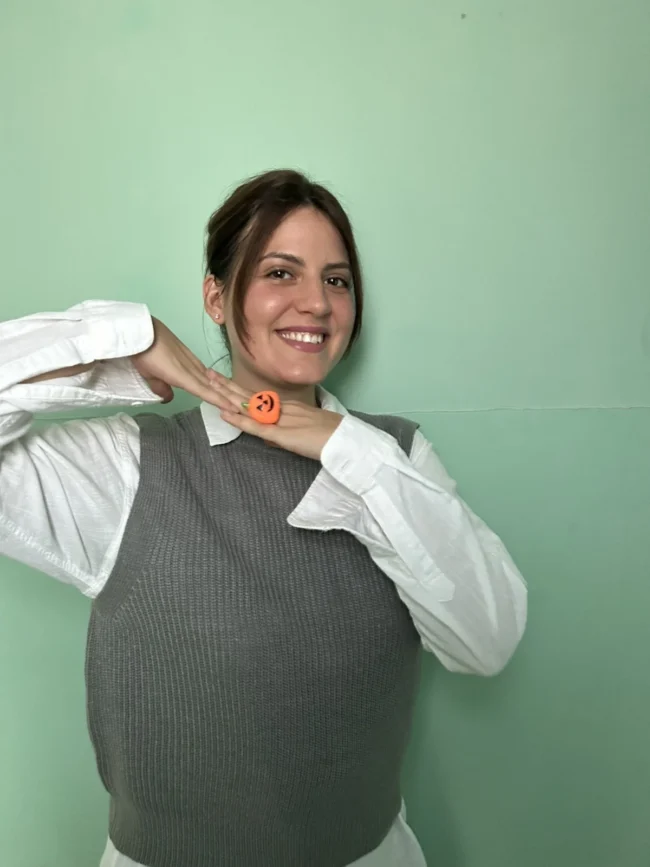
With a smile on her face and the most beautiful colors on her scarves that so faithfully reflect her cheerful nature, she “travels” across Europe through her lessons. In a gentle and unobtrusive way, she weaves the threads of the Bosnian language among children with roots in Bosnia and Herzegovina.
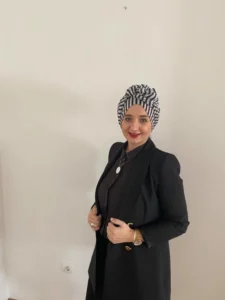
She graduated from the Faculty of Philosophy in Sarajevo, where she also gained her first professional experience. Today, she proudly points out that she is a teacher at the “Musa Ćazim Ćatić” Gymnasium in her hometown of Tešanj and an integral part of the Tako Lako team.
But who is teacher Melika in her classroom? “At first glance, a teacher of Bosnian language and literature. From the moment I enter the classroom, it is very important to me that students do not feel fear. It matters to me to notice that look on a sad face that needs a moment of humor, and someone to understand when they have problems beyond school walls.” Respect is very important to her, but it should be earned through one’s behavior towards students, not by creating fear. She understands this even more since working with high school students at the “Musa Ćazim Ćatić” Gymnasium. At that age, understanding and support matter most.
Reading Enriches The Mind
Through her work, she strives to bring books closer to children and awaken a love for the written word. Perhaps that is what makes her different, special. “I try to show them that reading enriches the mind, that through reading we become more critically oriented towards the world we live in, and that it helps us reflect more clearly on everything happening around us and within us,” she says enthusiastically, her love for the written word visible on her face.
She was drawn to our team by an advertisement on a social network. It intrigued her, especially because of the desire of children and their parents not to forget the language of their homeland, she points out. “Later, when the team introduced me to the goals, vision and mission of this project, I was extremely happy to have the opportunity to contribute so that children who come to their homeland once a year, a few times or even once in several years can maintain that connection with their roots. They want to strengthen those roots that will make them even richer individuals, because richness lies in multilingualism.”
Adapting To Children And First Challenging Situations
She notes that at the beginning it was difficult to adjust to the level of a child who can say only basic things in Bosnian, or sometimes nothing at all. Adapting her teaching approach to such children and conveying what they need to learn with a limited vocabulary was a challenge, she admits. “Other teachers in the team helped me greatly with advice and guidance on how to make the child feel free in communication and confident speaking Bosnian. Sometimes children do not know words that seem simple to us. For example, a few lessons ago, a child did not know the meaning of the word ‘more’. When you give associations such as summer, ice cream, Croatia, Montenegro, the child eventually understands the meaning.”
Language Is An Important Part Of Identity
Our teachers “travel” across Europe, the USA and Canada during their lessons. Teacher Melika also “visits” Denmark, the Netherlands, Sweden, Switzerland, Germany, Italy and Norway. She often teaches students with mixed backgrounds, where one parent is from Bosnia and Herzegovina or Croatia and the other may be Danish, German, Norwegian or Swedish. She is especially pleased that these children keep pace with those whose parents come from this region. “I increasingly get the impression that for our people living outside Bosnia and Herzegovina and the Balkans, it is very important to pass on a part of their identity to their children. This is best done through language. Language is the most important part of our identity. Through it we connect with culture, tradition, belonging and a sense of identity that every person needs,” she concludes.
Small Situations, Big Lessons
She believes parents should choose Tako Lako and our course so that children feel connected to their roots and the roots of their parents and ancestors, and master their language, the Bosnian language. She also believes it is especially important that Bosnian is spoken at least at home. “This course greatly helps parents as well, and this is feedback we often receive from them. Our focus is on communication, but through communication we also teach children grammar, important figures from Bosnia and Herzegovina and key events, such as Mak Dizdar and his poetry, the Winter Olympic Games in Sarajevo in 1984, the world-renowned painter Safet Zec, and athletes Edin Dzeko, Amel Tuka and Lana Pudar.”
Her lessons are always lively and productive. Students often surprise her, like a boy from Norway who described the profession of a blacksmith as a mystery occupation. She believes not all children in Bosnia and Herzegovina would be able to explain that profession. “When he showed us a photo, everyone recognized the blacksmiths from Baščaršija and understood what that profession involves. Children find it interesting when a word is the same in Bosnian and in the language of the country they come from, for example banana, paprika, kiwi…”
Applications Are Open
She concludes: “We are bringing another cycle of our course to an end, and applications for the next one are now open. I would highlight that our lessons are innovative, engaging for children, and full of laughter. These are impressions shared by parents whose children talk about what they do in class. Since working with these children, I feel much closer to our people living outside Bosnia and Herzegovina and better understand their lives, aspirations, fears and the gap between their roots and their current lives. It is not easy at all, but knowing the language of one’s roots enriches identity. I would advise parents not to break that connection with their roots, and language is the most important part of it. Whether they learn it through our course or another type of school, they are all welcome to join and try. We value both praise and constructive feedback because we share the same goal: preserving the Bosnian language in a child living far from their homeland. That is our wealth.”
Final thoughts
As the conversation slowly comes to an end, what remains is the impression of a calm and thoughtful energy that does not try to impose itself, but stays memorable through small, sincere details. Teacher Melika does not describe her work with big words, but shows it through simple situations that say more than they seem at first glance. In everything she shared, there is a quiet yet steady enthusiasm that does not seek attention, but naturally earns it.
Take a look at our other interviews as well, perhaps the next story will surprise you, make you smile or inspire you.